
Last Updated on 5th December 2025 by Caroline Haye

The quote above from Hippocrates, the “father of modern medicine”, is well-known. In fact, it has become my mantra (my very own Hippocratic Oath, if you like). Using food as medicine makes a lot of sense to me. Not least because I have an experiment in nutritional therapy to thank for my vitiligo success story. You could say I ate my way to better health. But is a healthy balanced diet enough for vitiligo?
It seems to me that eating a healthy balance diet is the most self-evident and common-sense approach to wellbeing imaginable. And yet, it is a far cry from our conventional 21st century, western approach to health care.
Drugs versus good nutrition
I certainly don’t deny that there are numerous wonderful, life-saving drugs and surgical procedures available today. And I wouldn’t for one moment advocate a return to the Dark Ages. But how is it that we have strayed so far from Hippocrates’ principle of good nutrition as the basis of good health? So far, in fact, that the first thing most people do when they have an ailment is reach for the pill bottle. We try to kill the symptom instead of giving our body the fuel it requires to heal itself.
We seem to have lost touch with the basics of natural healing through good nutrition. Not only that, but it sometimes feels like we have also allowed an army of faceless scientists (popularly referred to as “they”) to confuse the heck out of us with their contradictory dietary advice.
“Healthy balanced diet” myths
- “margarine is better for your arteries and your waistline than butter”… actually, no, margarine is not better for you than butter because it’s full of hydrogenated oils
- “drink red wine – it’s good for you because of the antioxidants…don’t drink any wine at all – it’s bad for you because of the alcohol… drink in moderation… “etc., etc.
- “saturated fats will give you heart disease”… well, actually, we now know this isn’t true – it’s trans fats that are bad for us
- “don’t eat butter, eggs, cheese and red meat – they’re bad for your cholesterol levels.. also not an accurate statement, for the same reasons as above
- “eat 5 servings a day of fruit and veg” … are you kidding me? That figure was plucked out of thin air – it’s not even half of what our body requires on a daily basis.
And if that weren’t enough to leave us boggling, what about the cynical advertising thrown at us by the food industry?
Misleading food advertising
- “buy our low-fat diet foods” (never mind that they are loaded with sugar and largely responsible for producing a generation of obese yo-yo dieters)
- “drink our zero-sugar drinks” (don’t worry about their carbonated, toxic flavourings and chemical sweeteners )
- drink our pasteurised milk – it’s safer than unpasteurised” (yes – if you don’t mind the fact that there is precious little calcium or other nutrients left in it).
Our grandparents instinctively knew that food should be wholesome and unadulterated. So at what point in the last few decades did we collectively lose touch with reality and centuries of common sense?
And this brings me to perhaps the most insidiously misleading advice of all… Insidious, because it sounds so plausible… “There is no need for nutritional supplementation if you eat a healthy, balanced diet.” Sounds like good advice, doesn’t it? Well, it would be if such a thing were even possible for the average person in the 21st century.
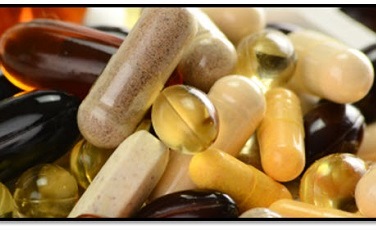
Do we need vitamin and mineral supplements?

The alarming truth is that we would need to eat our way through barn-loads of fresh produce on a daily basis if we wanted to get the same nutritional value from our food as our grandparents did. This – combined with a poor digestive system – might explain why 50 years of eating a “healthy balanced diet” left me with 80% vitiligo and suffering from chronic fatigue.
Even if you have the most efficient digestive system on earth, your chances of maintaining healthy levels of vitamins and minerals in your body has greatly reduced over recent decades. Intensive farming methods, the use of artificial fertilisers and pesticides and GM crop production have resulted in serious depletion of our soil. The fruit and veg that most of us eat today actually contains 60-80% fewer vitamins than 30 years ago! And that’s quite aside from the further nutrient loss that occurs as a result of the transportation, storage, preservation and processing of our food.
I recently listened to a radio broadcast about wholefood supplements which stopped short of echoing the “healthy balanced diet” argument. But it did put forward the view that we should get the bulk of our nutrition from our food… And use supplements as an add-on to do what their name suggest (i.e. supplement our food intake).
My conclusion
If we were talking about getting all our food from genuinely organic, local sources I’d be the first to agree. However, for all the reasons I have given above, I am almost coming to a radical-sounding conclusion… That what we may actually need to do now is to turn supplementation on its head. i.e. Take very high quality, nutrient-dense green wholefood “supplements” (like the one that helped me to re-pigment my vitiligo) and supplement this with the so-called “real” food we put on our plate. In other words “let food be thy medicine and let supplements be thy food!”
For further information on eating a healthy balanced diet for vitiligo, see my post: Eating For Vitiligo Recovery.



One thought on “Is a healthy balanced diet enough for vitiligo?”
Great post, keep up the good work!